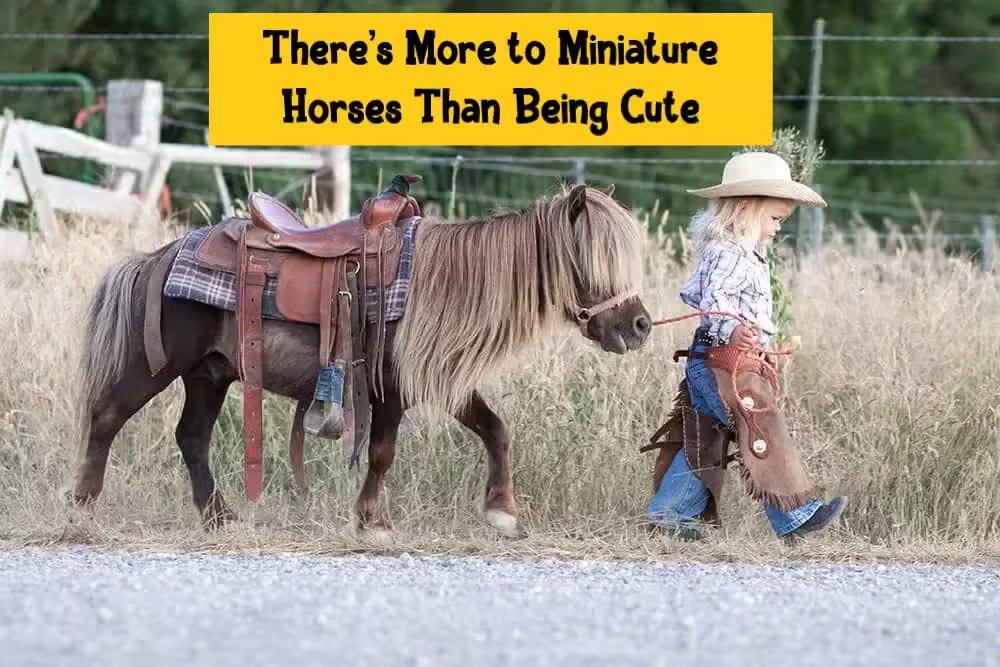
We all know cute things come in small packages. The same can be said for horses.
Miniature horses are exactly like they sound – small versions of horses, usually standing around 34-38 inches. Their height-based definition technically classifies them as ponies, but many have horse characteristics and are viewed as such by their registries. All this brings about a recurring debate over how they should be classified.
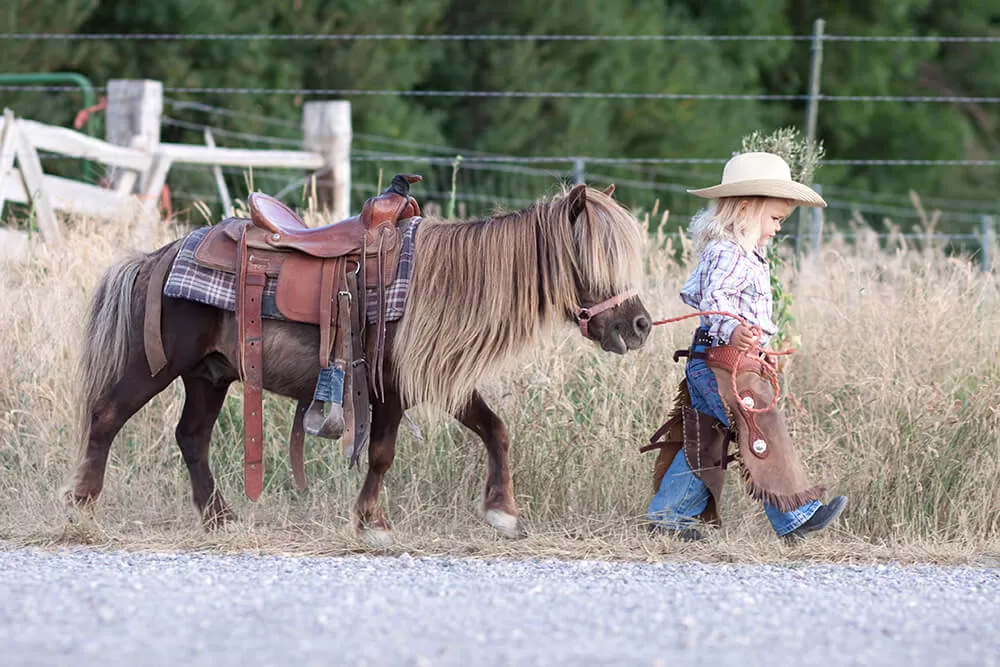
No matter what you call them, we all know they’re 100 percent adorable.
A little overview
Miniature horses are located in many countries around the globe, including North and South America. They’re quite friendly and interact well with people, so many keep them as family pets, though some are used as service animals for people with disabilities. They possess natural horse behavior, so there is a fight or flight instinct present.
History
They were first bred in Europe in the 1600s and later viewed as the pets of nobility. However, that didn’t stop some from using them in coal mines after English rule that prohibited the use of young children as mine workers. Argentina developed the Falabella breed in the mid-1800s. South Africa also became successful at breeding miniature horses – there are 700 miniature horses registered there. The first ones in America date to 1861, and more were brought to the U.S. in the late 1800s – most to work in the small shafts of coal mines. By the 1960s, miniature horses were viewed less as working horses and more in equestrian disciplines.
Registries
The American Miniature Horse Association (AMHA) and the American Miniature Horse Registry (AMHR) are the two registries responsible for miniature horses in the U.S. Both were established in the 1970s and are two of dozens across the globe. Some of these stress breeding of miniatures with horse characteristics, others want minis to keep pony characteristics. All registries look closely at height when it comes to minis, which is measured at the last hairs of the mane found at the withers. In the AMHR, height cannot exceed 38 inches; the AMHA requires that horses stand under 34 inches.
Health
They often live longer than full-sized breeds with a life span of 25 to 35 years, yet they come with health issues that others don’t. Owners tend to feed them the same amount as other horses, so obesity can be a problem. They also grow the same number of teeth but have a smaller mouth, so it leads to crowding, over- and underbites. Metabolism and reproduction also seem more prevalent in miniatures.
Uses
Horse shows present the most common opportunities for miniature horses. They’re also used as companion animals and pets because they’re less intimidating than full-sized horses.