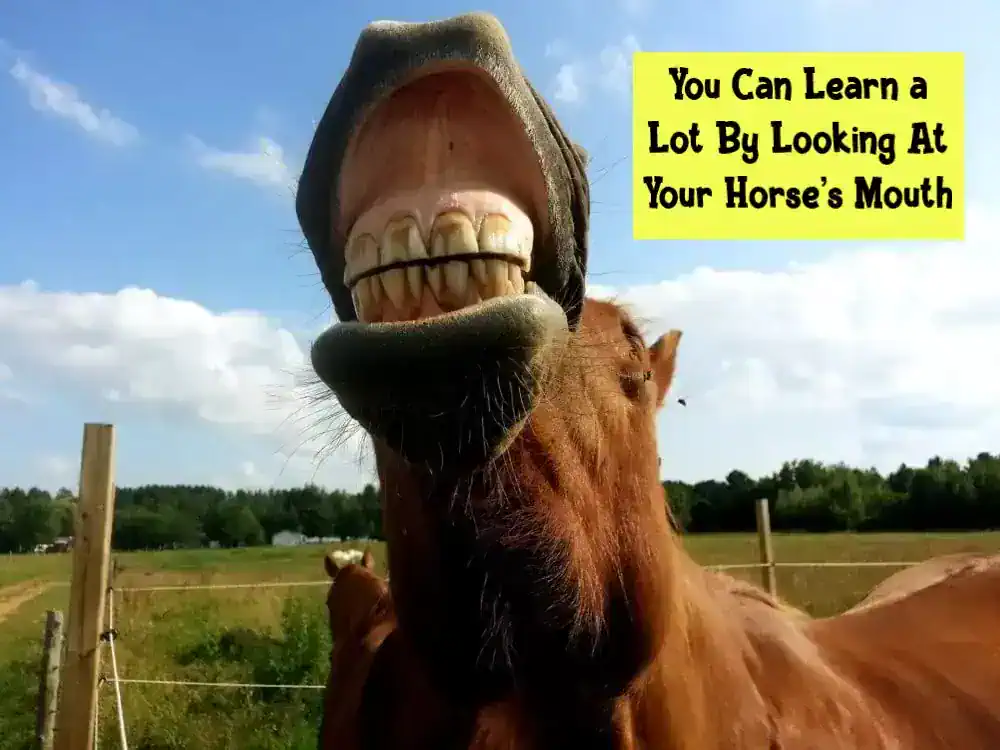
Because a horse can’t speak, it’s no wonder we have to watch his every move for signs, cues and signals about his health. And even though his big, toothy chops can’t utter a single word, the mouth is still one area that can tell us a lot.
The saying, “Don’t look a gift horse in the mouth,” came from equestrians long ago. They knew a person could size up a horse’s value by checking his mouth. Looking at that area can tell a lot about a horse’s age, habits and overall health. As such, checking his mouth was considered impolite and disrespectful.
These days, checking a horse’s mouth is not only not rude, it’s a necessary and essential part of horse care. Go ahead, have him open wide and take a look inside – what you learn has its rewards.
Here’s all the things you can learn about from your horse’s mouth.
His overall health
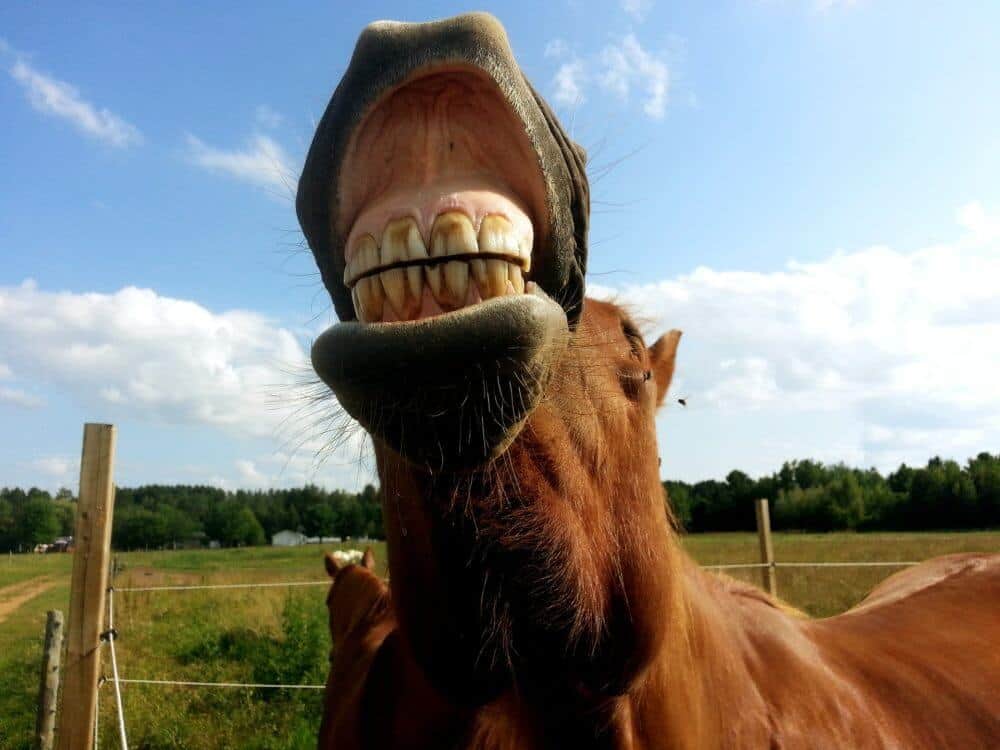
The horse’s gums tell a lot about his health, and any look that differs from the normal pink salmon color could mean a problem – possibly a serious one. Remember, they should be completely pink all the way around. Even if they’re mostly pink, you should know there’s a dark red line at the gum line – that’s sometimes called the toxic line. All of this is easy enough to check that your veterinarian may ask you to check them while on the phone in order to save a trip (and the expense).
A yellow or yellow-brown color means there’s a high concentration of a pigment called bilirubin, which comes about when red blood cells break down. That can mean liver disease because that organ is not able to filter the pigment from the bloodstream. Yellow can also mean a high levels of beta carotene – the same way in which our own skin turns an orange-ish color when we eat a lot of carrots. The same happens in horses, but it can also come from large amounts of alfalfa.
Bright red gums could mean endotoxemia, which is poisoning from toxic plants. That red color can also come from severe dehydration, another serious problem.
A pale pink or white color is probably due to decreased circulation, anemia, fever, internal bleeding, or systemic shock.
Blue or grey can mean he has low oxygen levels in the blood, often because of lung disease.
You’ll always want to be familiar with the regular shade of his gums, and keep in mind they can be slightly darker than usual following exercise. Check them all the time and you’ll know what’s normal for your horse.
His age
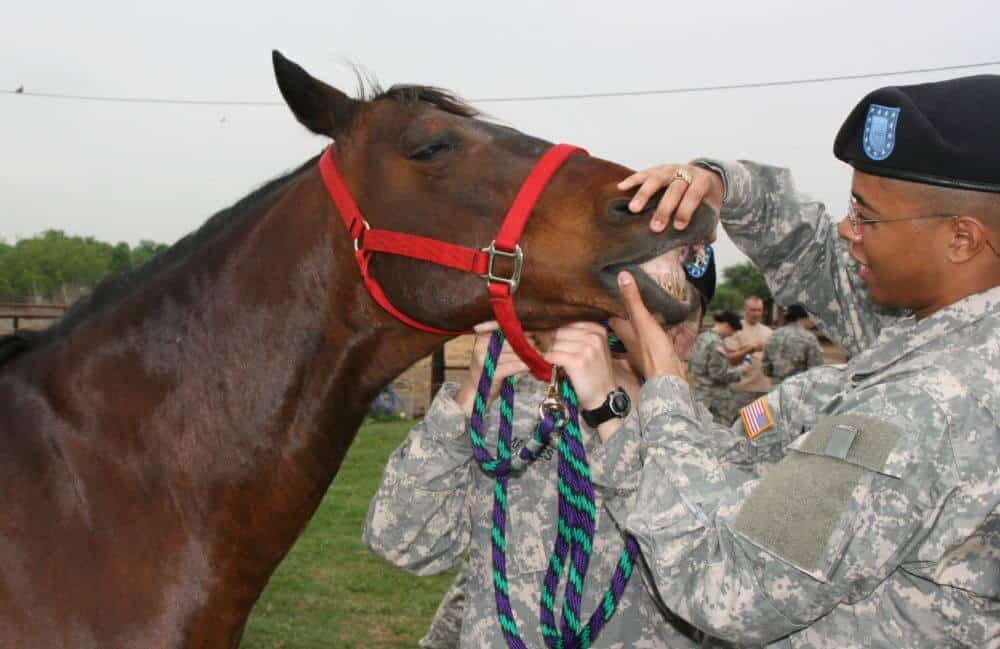
Since teeth are located in the mouth, this should be a no brainer. But it’s important to know that as horses evolved, their teeth adapted for grazing. The incisors are the forward ones, used for shearing off forage. Check all of his teeth as much as possible, which include the molars and premolars that grind feed before it’s swallowed. He’ll get two sets of teeth during his lifetime, and knowing which set he has helps better determine his age and needs as a horse.
Also note the Galvayne’s groove. It’s located in the corner of the horse’s upper incisor teeth, first noticeable around age 10. Each year it lengthens and by age 15 it as migrated to about halfway down the tooth, then all the way down by 20. By 30 it vanishes from sight.
Knowing what his teeth and gums should look like at which age will help you to better detect abnormalities and take care of him better.
How he’s feeling
We all love horses because they’re honest creatures. The mouth does many things to indicate how he’s dealing with pain, stress, discomfort, or confusion. Sometimes a horse will do something because he’s trying to hide. Think about all the ways you see your horse use his mouth: chewing, chomping, clacking, drooling, lip popping, tongue chewing and licking. Even a closed mouth means something.
Figure out what your horse does and why he does it, and you’ll discover more about how he feels.
His behaviors
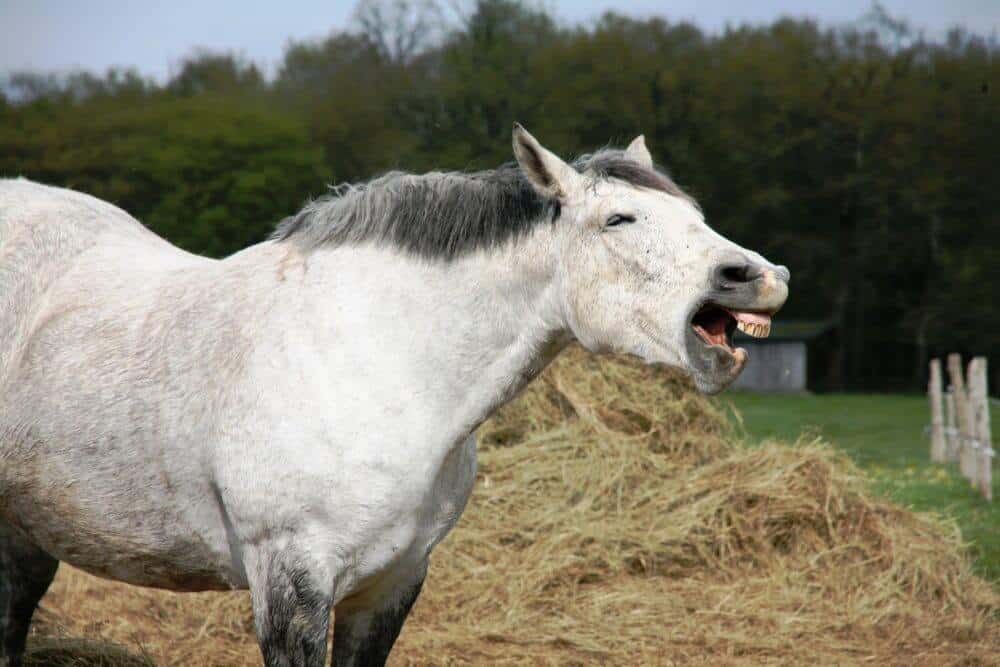
If you find incisors that are really worn or chipped, that could mean your horse is a cribber. Cribbing or crib biting involves him grasping onto things with his teeth. Sometimes he’ll gnaw on wood as if it’s food. That sort of behavior can mean stress or some irritability in his life. It can also mean neck trouble, because he carries his head in a way not suitable for riding.
Cribbing is a rather undesirable habit, and you’ll want to do everything you can do rid him of it. Fortunately, and like so many other things, you can tell if he’s doing it by looking in his mouth.